

Share

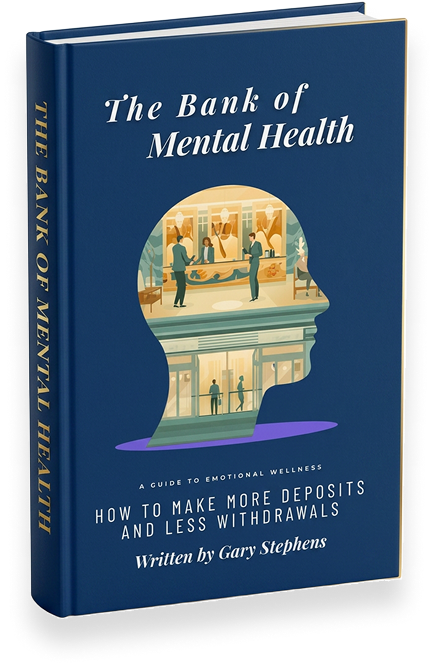
How To Make More Deposits and Less Withdrawals.

A calming, practical guide to building daily habits that pour into your emotional bank account. Discover how to create long lasting mental wellness by truly treating your emotional currency like financial currency. This book will help you design practical strategies that will help you increase your mental health deposits and minimize your withdrawals.

Secure Checkout

Safe, encrypted payments and immediate access.

Instant Download

Get the full PDF delivered instantly to your inbox.

Real Strategies

Actionable advice, no clinical jargon or fluff.

1 in 5

adults experience mental health issues annually

76%

of people report work-related stress as primary drain

1 in 7

U.S. youth ages 6 - 17 experience a mental health issue each year

17.6%

US Veterans experience a mental health illness

Treat your mind like an account worth investing in.

We live in a world that glorifies giving, achieving, and pushing through — yet nobody teaches us how to replenish the emotional reserves we burn through every single day.

Gary Stephens spent years researching why brilliant, caring, hardworking people end up depleted, burned out, and disconnected from joy. The answer wasn’t willpower or hustle. It was accounting.

Built On Simplicity

The one common factor that takes away the guesswork.

Calming, not preachy

No buzzwords or hustle culture. Just gentle, doable shifts that compound into real change.

A simple framework

Treat your mind like an account. Make deposits. Recognize withdrawals. Protect your reserves.

Designed for busy lives

Concepts and thoughts you can easily apply right away.

A quiet conversation with a steady friend.

Gary Stephens is someone who’s been through the struggle. For years, he battled his own mental health challenges—the kind that made him feel like he was drowning. He hit rock bottom more than once, and each time he had to figure out how to climb back up. Through those dark moments, he discovered something that actually worked: treating his emotional health like a financial investment.

This book isn’t written by a clinical expert. It’s written by someone who’s been there—who’s made the mistakes, felt the pain, and learned the hard way what actually helps. Gary shares the real lessons from his own journey. If you’re tired of feeling broken and ready to build something real, this book is for someone like you, written by someone like you.

"I didn't want to write another book that pressured you to optimize. I wanted to write the one I needed when I was overdrawn."

— Gary Stephens

A quiet read, structured like a steady practice.

Browse a few opening passages. Each chapter ends with a small, doable practice you can start today.

01

Chapter

The Mental Bank Account

Understanding Your Balance – Learn the foundational concept of treating your mental health like a financial account, with deposits and withdrawals that determine your overall wellbeing.

02

Chapter

The Biggest Withdrawals

Identifying Emotional Debt – Discover the hidden drains on your mental health and learn to recognize patterns that create emotional overdrafts in your life.

03

Chapter

The High-Yield Deposits

Explore practical strategies and daily practices that build your mental wealth over time, creating lasting positive change.

04

Chapter

Overdraft Protection

Handling Crises and Burnout – Develop resilience strategies to protect yourself during life’s most challenging moments and prevent complete emotional bankruptcy.

05

Chapter

The Interest Rate of Relationships

Social Capital – Understand how your connections with others either multiply your mental wealth or drain your emotional resources.

06

Chapter

The Confidence Reserve

Your Most Valuable Asset Class – Build and maintain the self-assurance that serves as the foundation for all other aspects of mental wellness.

07

Chapter

The Kindness Dividend

Why Giving Is Actually Giving – Discover the surprising returns that come from acts of kindness and how generosity enriches your own mental health.

08

Chapter

The Lowest Point

How Being Overdrawn Led Me Back To My Lord and Savior – A personal journey through the darkest moments and the spiritual awakening that brought restoration and hope.

Trusted by readers rebuilding their reserves.

This book completely shifted how I view my daily habits. The financial metaphor makes so much sense and gave me practical tools to stop draining my emotional energy.”

Sarah Jenkins.

Reader

“Gary writes with such raw honesty. It doesn’t feel like a clinical textbook; it feels like advice from a friend who has actually been in the trenches and found a way out.”

Marcus T.

Entrepreneur

“I was running on empty for years and didn’t even know it. This book gave me the vocabulary — and the tools — to finally stop the drain and start filling back up.”

Jasmine T.

Teacher & Mother

“The chapter on ‘Overdraft Protection’ alone is worth the price. I’ve implemented these strategies in my life and finally feel like I have a buffer against burnout.”

Elena Rodriguez

Teacher

What changes when you tip the balance.

Less anxiety

Fewer reactive spirals. More grounded mornings.

Better sleep

Wind-down rituals that actually stick.

Steadier energy

Replace silent drains with quiet, reliable lifts.

Healthier boundaries

Saying no without the guilt residue.

More presence

Show up for the people who matter — including you.

Protected reserves

Build a buffer for the hard weeks before they arrive.
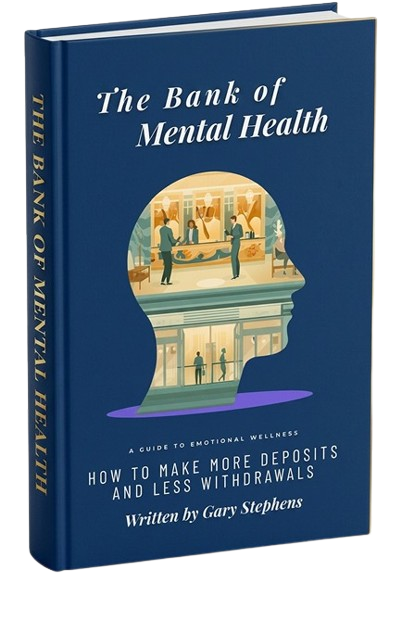
Start making deposits today.

Download the full ebook instantly and begin a calmer, more sustainable relationship with your mental health.

$9.99

Scroll to Top

Here’s a different way to think about your mental health. Imagine you have a bank account. But instead of dollars or cents, this account holds your energy, your patience, your ability to focus and make good decisions, and your bounce-back power when things go wrong.

A withdrawal is anything that leaves you with less than you had before. Some withdrawals you can’t avoid. Traffic happens. Deadlines happen. Getting sick happens. I can’t help you with those. None of us can.

Think of it like this. A small deposit, made consistently over time, grows into something huge. The key word is small. Most of us fail because we try to do too much at once. We go from zero to hero overnight, burn out in three days, and then feel like failures.

An overdraft means you’re running on borrowed energy. You have nothing left to give, but life is still demanding more. You might find yourself snapping at people you love. Crying for no clear reason. Feeling completely numb. These are the signs that you need to stop and use your emergency tools. I ignored these signs for years. Don’t be like me.

Every close relationship is a joint account. You both deposit. You both withdraw. If one person keeps depositing and the other keeps withdrawing, the account goes negative. And so does the relationship.

If your mental bank account tracks your daily energy, then self-confidence is your reserve currency. It’s the gold bullion in the vault. It doesn’t bounce around with every small withdrawal. It determines how much you trust yourself to handle whatever comes next.

The Kindness Dividend is this: When you deposit kindness into someone else’s account, your own balance goes up more than theirs does. It’s the only investment where both people walk away richer.

My mental health account was empty. Not low. Not struggling. Empty. Overdrawn. I had borrowed so much from tomorrow that tomorrow had nothing left to give. I was tired in a way that sleep couldn’t fix. I was sad in a way that good news couldn’t lift. I was alone even when people were in the room.